TRHR antibody
Principal name
TRHR antibody
Alternative names for TRHR antibody
TRH-R, Thyrotropin-releasing hormone receptor, Thyroliberin receptor
SwissProt ID
O46639 (Bovin), O93603 (Chick), P21761 (Mouse), P34981 (Human), Q01717 (Rat), Q28596 (Sheep)
Ncbi ID
NP_003292.1, NP_003292, 9606, ADR82960.1, NM_003301, NP_037179.1, NM_013047
Available reactivities
Available hosts
Available applications
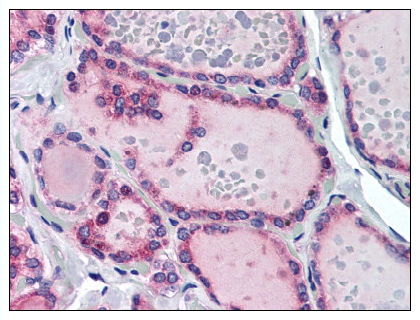
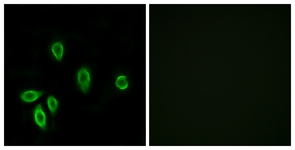
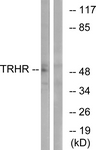
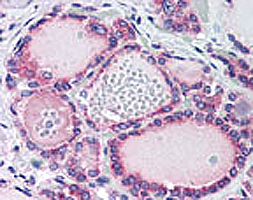
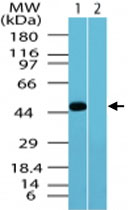
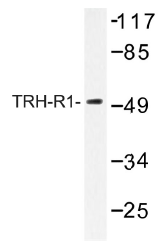
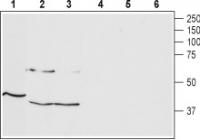
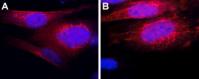
Paraffin Sections (P), Western blot / Immunoblot (WB), Enzyme Immunoassay (E), Immunocytochemistry/Immunofluorescence (ICC/IF), Frozen Sections (C)
Background of TRHR antibody
Thyrotropin-releasing hormone (TRH), is a widely distributed tripeptide which acts as a hormone, a paracrine regulatory factor and a neurotransmitter/neuromodulator; it is expressed in many parts of the brain as well as in various peripheral tissues. In the hypothalamus, TRH is secreted from the paraventricular nucleus (VPN) by TRH neurons prior to a post-translatiol processing from its precursor, pro-TRH. A key player in the regulation of the hypothalamus-pituitary-thyroid (HPT) axis, TRH is released into the hypophyseal portal circulation of the median eminence and reaches the pituitary, where it binds to TRH receptors, thereby stimulates the secretion of tyrothropin (thyroid-stimulating hormone; TSH). TSH, in turn, affects the thyroid to produce T4 which is subsequently converted into its biologically-active alog, T3 - a negative mediator of TRH. In the tanycytes, ependymal cells of glial origin located in close proximity to the VPN, T4 is converted to T3 by the enzyme deiodise II (dio2) - a counterpart to deiodise III (dio3) which conversely ictivates the above mentioned thyroid hormones, thus so indirectly promotes the production of TRHs. TRH receptor 1 (TRH-R1), the only identified TRH receptor in humans, is a G protein-coupled receptor (GPCR) abundant in the anterior pituitary, neuroendocrine system, autonomic nervous system and the visceral regions of the brain. Like all members of GPCRs, TRH receptor has seven transmembrane domains, and extracellular N-terminus and an intracellular C-termil tail. TRH receptor couples Gq upon activation which in turn leads to the activation of phospholipase C. From a behavioral aspect, it was shown that TRH-coupled TRH-R1 increases cognitive arousal by directly exciting the sleep/wake system in the lateral hypothalamic area, and inhibits seizure activity in the hippocampus by facilitating GABA release, whereas its deficiency, as observed in mutant model mice, is linked to growth retardation, depression, and anxiety-like behavior.
General readings
Iwasaki, T., et al., (1996). J. Biol. Chem. 271 (36), 22183-22188.
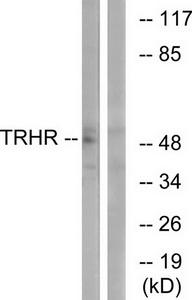

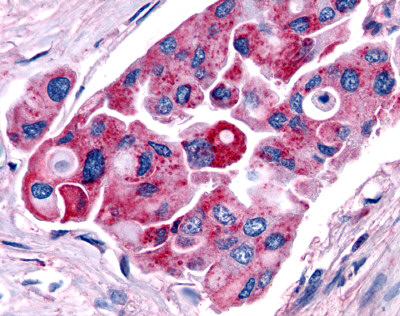
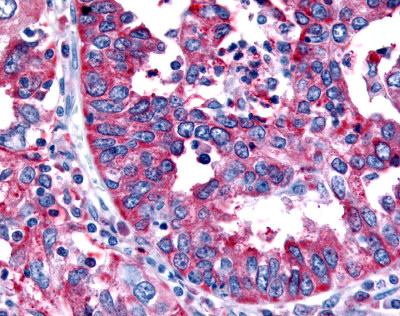
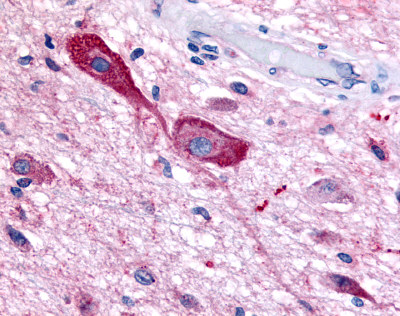
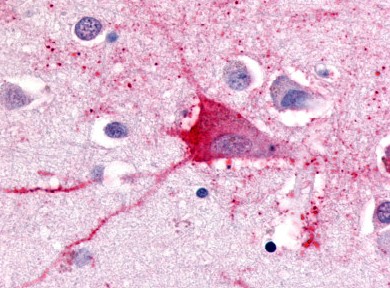
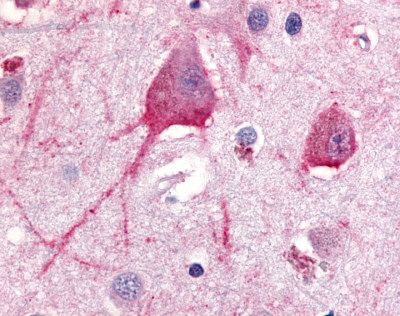
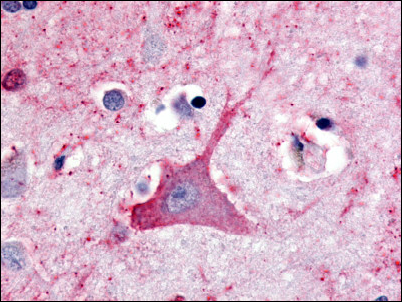
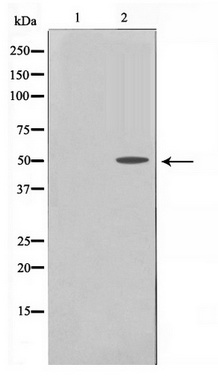
Primary Antibodies
| Catalog No. | Host | Iso. | Clone | Pres. | React. | Applications | |
|---|---|---|---|---|---|---|---|
| AP08270PU-N | TRHR (350-400) antibody |
||||||
 |
Rabbit | IgG | Aff - Purified | Bov, Can, Hu, Mky, Ms, Op, Rt | P, WB |
50 µg /
$425.00
|
|
| OriGene Technologies GmbH | |||||||