Timeless (Tim) antibody
Principal name
Timeless (Tim) antibody
Alternative names for Timeless (Tim) antibody
Timeless1, Tim1, Protein timeless homolog
SwissProt ID
O17482 (Drovi), O44431 (Drohy), P49021 (Drome), Q9R1X4 (Mouse), Q9UNS1 (Human), Q9Z2Y1 (Rat)
Ncbi ID
NP_003911.2, NP_003911, NP_001129554, NM_003920, NP_001129554.1, BC058641, NM_001164080
Available reactivities
Available hosts
Available applications
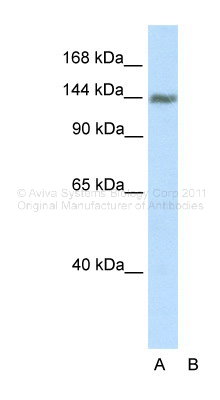
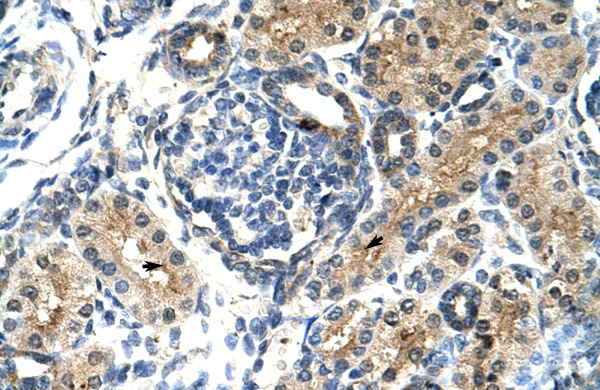
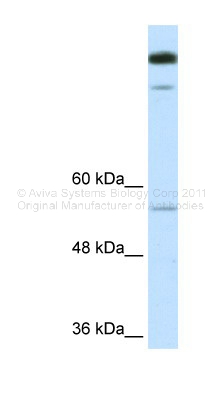
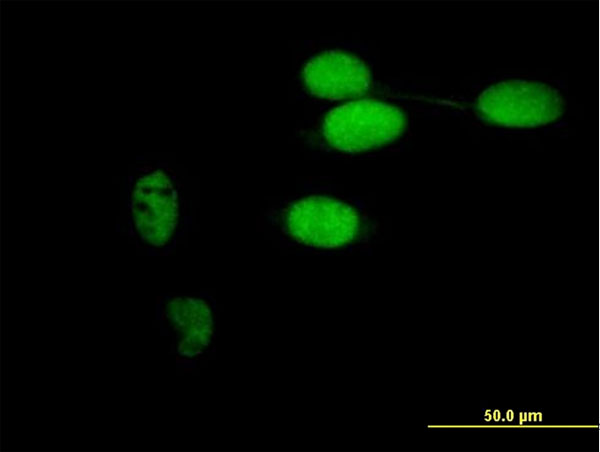
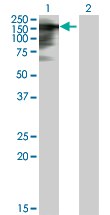
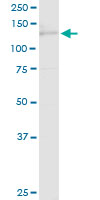
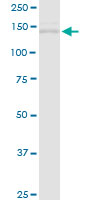
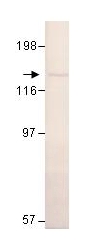
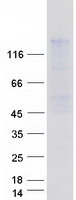
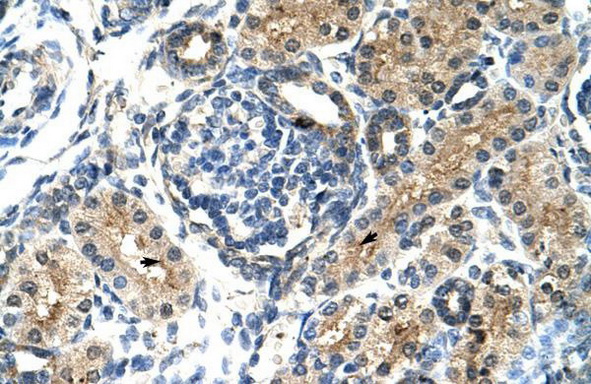
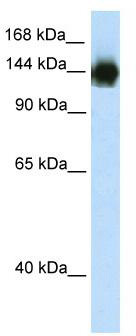
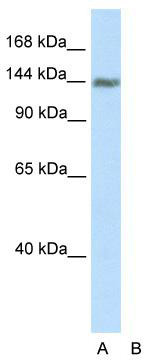
Enzyme Immunoassay (E), Western blot / Immunoblot (WB), Paraffin Sections (P), ELISA (detection) (E(detection)), Immunocytochemistry/Immunofluorescence (ICC/IF), Immunoprecipitation (IP)
Background of Timeless (Tim) antibody
The circadian rythms of behavior and hormones are controlled at the gene expression level. Both higher mammals and Drosophila essentially use homologues genes as molecular gears to control the circadian oscillations. In D. melanogaster the period and timeless genes are the 2 major player of its clock function and its auto-regulatory feed back loop for circadian rythms. In vertebrates the homologies of these genes are also known and are expressed in superchiasmatic nucleus in CNS. The mammalian homologues of fruit fly Timeless (TIMLS) gene is highly expressed in brain with weak circadian expression in superchiasmatic nucleus. In retina, the Timeless is expressed with robust circadian rhythm with light and dark cycle. In addition, TIMLS interacts with Per1, another member of the circadian-related gene in retina, the two together control the autoregulatory feedback mechanism of circadian oscillation (1).
In vertebrates, the homologues of D. melanogaster genes TIMLS and period (Per), are responsible for a variety of functions beside circadian rythms. Mammalian TIMLS exhibit 5 homologous regions with drosophila’s TIMLS gene and is critical to vertebrate embryonic development. The mouse TIMLS is expressed in all organs, the gene is significantly up-regulated in lung morphogenesis during early phases of development. In lung it is expressed in non-ciliated columnar epithelial cells. The conditional knockdown of TIMLS in superchiasmatic nucleus disrupts neuronal activity rythams and altered the known core clock elements (2). In concert with mouse period homolog the TIMLS functions as a negative feed back arm of the mammalian molecular clock (2). It is important to note that TIMLS levels do not oscillate in the SCN nor they are acutely altered by day light cycle. The yeast two hybrid assays revealed no interaction with period and TIMLS protein suggesting that in mouse circadian rythms, per-per interactions have replaced the per-TIMLS dimmers in the molecular functioning of mammalian clock (3).
TIMLS is a 1197 amino acid protein, was mapped on chromosome 12q12-13 in Human and 10D3 in Mouse. The C-terminal end of TIMLS protein also contained a SANT domain in this region. The Mouse and Human TIMLS share a 83% homology with fruit fly TILMS protein.
General readings
Sangoram,A.M., (2005) Mol. Cell. Biol. 25 (8), 3109-3116



Primary Antibodies
| Catalog No. | Host | Iso. | Clone | Pres. | React. | Applications | |
|---|---|---|---|---|---|---|---|
| AP55231SU-N | Timeless (Tim) antibody |
||||||
 |
Rabbit | Serum | Hu | E, P, WB |
0.2 ml /
$430.00
|
||
| OriGene Technologies GmbH | |||||||