KCNQ1 antibody
Principal name
KCNQ1 antibody
Alternative names for KCNQ1 antibody
KCNA8, KCNA9, KVLQT1, KQT-like 1, Potassium voltage-gated channel subfamily KQT member 1, Voltage-gated potassium channel subunit Kv7.1, IKs producing slow voltage-gated potassium channel subunit alpha KvLQT1
SwissProt ID
O97531 (Felca), P51787 (Human), P70057 (Xenla), P97414 (Mouse), Q9MYS6 (Rabit), Q9TTJ7 (Pig), Q9Z0N7 (Rat)
Ncbi ID
NP_861463, NM_181797, NP_000209, NP_000209.2, AAI11848.1, NP_861463.1, NM_181798, NM_008434, NM_032073
Available reactivities
Available hosts
Available applications
Western blot / Immunoblot (WB), Paraffin Sections (P), Flow Cytometry (F), Enzyme Immunoassay (E), Immunocytochemistry/Immunofluorescence (ICC/IF), Frozen Sections (C), Immunoprecipitation (IP)
Background of KCNQ1 antibody
Ion channels are integral membrane proteins that help establish and control the small voltage gradient across the plasma membrane of living cells by allowing the flow of ions down their electrochemical gradient (1). They are present in the membranes that surround all biological cells because their main function is to regulate the flow of ions across this membrane. Whereas some ion channels permit the passage of ions based on charge, others conduct based on a ionic species, such as sodium or potassium. Furthermore, in some ion channels, the passage is governed by a gate which is controlled by chemical or electrical signals, temperature, or mechanical forces.
There are a few main classifications of gated ion channels. There are voltage- gated ion channels, ligandgated, other gating systems and finally those that are classified differently, having more exotic characteristics.
The first are voltage- gated ion channels which open and close in response to membrane potential. These are then separated into sodium, calcium, potassium, proton, transient receptor, and cyclic nucleotide-gated channels; each of which is responsible for a unique role. Ligand-gated ion channels are also known as ionotropic receptors, and they open in response to specific ligand molecules binding to the extracellular domain of the receptor protein. The other gated classifications include activation and inactivation by second messengers, inward-rectifier potassium channels, calcium-activated potassium channels, two-pore-domain potassium channels, light-gated channels, mechano-sensitive ion channels and cyclic nucleotide-gate channels. Finally, the other classifications are based on less normal characteristics such as two-pore channels, and transient receptor potential channels (2).
Specifically, Kv7.1 (KvLQT1) is a potassium channel protein coded for by the gene KCNQ1. Kv7.1 is present in the cell membranes of cardiac muscle tissue and in inner ear neurons (3) among other tissues. In the cardiac cells, Kv7.1 mediates the IKs (or slow delayed rectifying K+) current that contributes to the repolarization of the cell, terminating the cardiac action potential and thereby the heart's contraction (4, 5).
General readings
1. Yasuda K, Miyake K, Horikawa Y, Hara K, Osawa H, Furuta H, Hirota Y, Mori H, Jonsson A, Sato Y, Yamagata K, Hinokio Y, Wang HY, Tanahashi T, Nakamura N, Oka Y, Iwasaki N, Iwamoto Y, Yamada Y, Seino Y, Maegawa H, Kashiwagi A, Takeda J, Maeda E, Shin HD, Cho YM, Park KS, Lee HK, Ng MC, Ma RC, So WY, Chan JC, Lyssenko V, Tuomi T, Nilsson P, Groop L, Kamatani N, Sekine A, Nakamura Y, Yamamoto K, Yoshida T, Tokunaga K, Itakura M, Makino H, Nanjo K, Kadowaki T, Kasuga M.
Variants in KCNQ1 are associated with susceptibility to type 2 diabetes mellitus.
Nat Genet. 2008 Aug 17.
PMID: 18711367

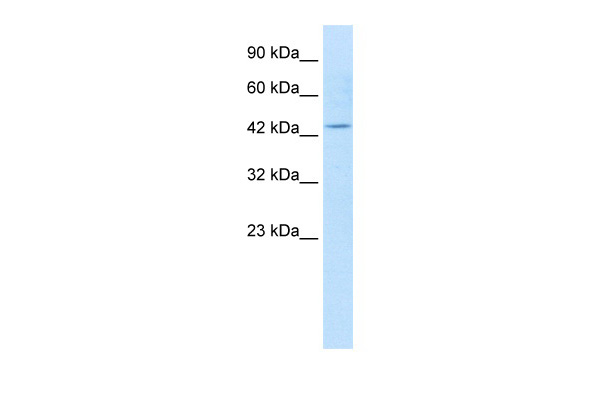
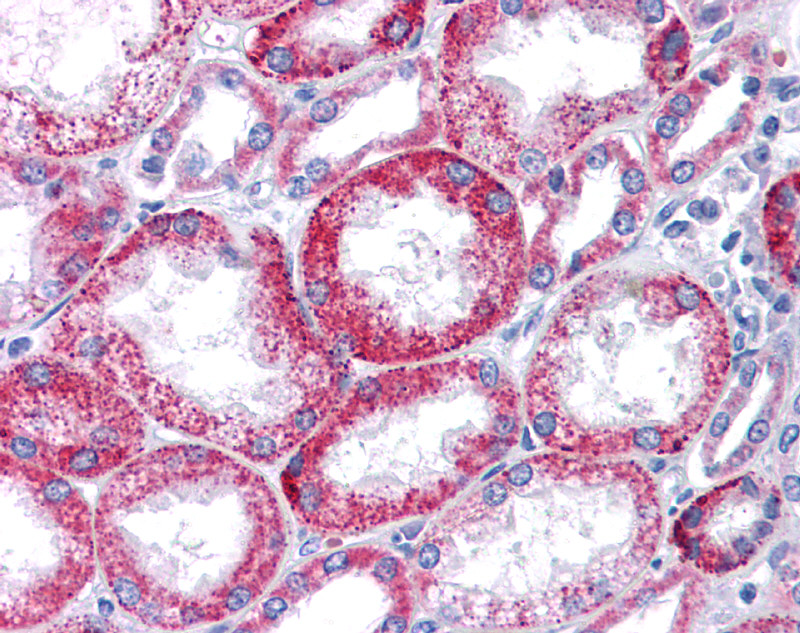

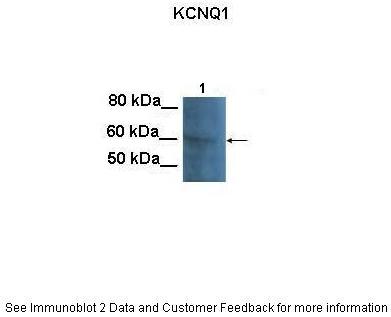
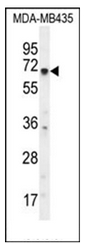


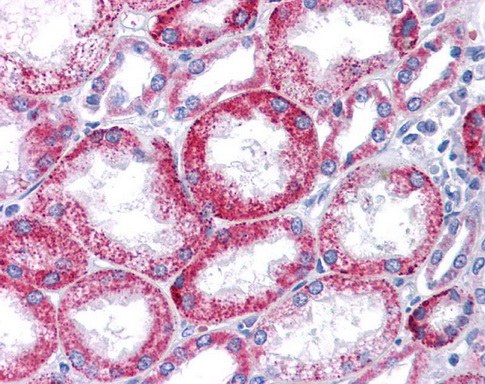
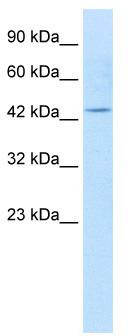
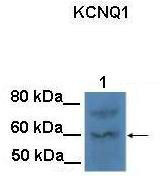
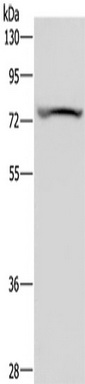
- Quick-Filters:
- Highly Validated (1)
Primary Antibodies
| Catalog No. | Host | Iso. | Clone | Pres. | React. | Applications | |
|---|---|---|---|---|---|---|---|
| AM06707SU-N | KCNQ1 antibody |
||||||
 |
Mouse | IgG2b | 5E12 | Ascites | Hu | E, F, WB |
0.1 ml /
$410.00
|
| OriGene Technologies GmbH | |||||||
 +3 additional images +3 additional images |
Highly validated antibody! |
||||||
| TA305704 | KCNQ1 (C-term) antibody |
||||||
| Goat Anti-KCNQ1 Antibody | |||||||
 |
Goat | Aff - Purified | Bov, Can, Hu, Ms, Rt | WB |
0.1 mg /
$360.00
|
||
| OriGene Technologies, Inc. | |||||||
| TA326344 | KCNQ1 antibody |
||||||
| Mouse monoclonal KCNQ1 Antibody | |||||||
 |
Mouse | IgG1 | S37A-10 | Purified | Hu, Ms, Rt | C, IP, WB |
0.1 mg /
$410.00
|
| OriGene Technologies, Inc. | |||||||
| +2 additional images |
|||||||
| TA327314 | KCNQ1 antibody |
||||||
| KCNQ1 Rabbit Polyclonal Antibody | |||||||
 |
Rabbit | IgG | Purified | Hu, Ms, Rt | WB |
0.1 mg /
$335.00
|
|
| OriGene Technologies, Inc. | |||||||
| TA328660 | KCNQ1 antibody |
||||||
| Rabbit Polyclonal Anti-KV7.1 (KCNQ1) | |||||||
 |
Rabbit | Purified | Hu, Ms, Rt | WB |
0.2 ml /
$585.00
|
||
| OriGene Technologies, Inc. | |||||||
| TA350113 | KCNQ1 antibody |
||||||
| Rabbit Polyclonal Anti-KCNQ1 Antibody | |||||||
 |
Rabbit | IgG | Purified | Hu, Ms, Rt | E, P, WB |
0.1 ml /
$335.00
|
|
| OriGene Technologies, Inc. | |||||||
| +1 additional image |
|||||||
| 73-081 | KCNQ1 antibody |
||||||
 |
Mouse | IgG1 | N37A/10 | Supernatant | Hu, Ms, Rt | C, IP, WB |
5 ml /
$490.00
|
| Antibodies Incorporated | |||||||
| +1 additional image |
|
||||||
| 75-081 | KCNQ1 antibody |
||||||
 |
Mouse | IgG1 | N37A/10 | Purified | Hu, Ms, Rt | C, IP, WB |
0.1 ml /
$570.00
|
| Antibodies Incorporated | |||||||
| +1 additional image |
|
||||||
| AP52316PU-N | KCNQ1 (N-term) antibody |
||||||
 |
Rabbit | Ig | Aff - Purified | Hu | WB |
0.4 ml /
$415.00
|
|
| OriGene Technologies GmbH | |||||||

Lysates
| Catalog No. | ||
|---|---|---|
| LY405589 | KCNQ1 overexpression lysate |
|
 |
0.1 mg /
$495.00
|
|
| OriGene Technologies, Inc. |
Mouse Lenti ORF Particles
| Catalog No. | ||
|---|---|---|
| MR209902L2V | Lenti ORF particles, Kcnq1 (GFP-tagged) - Mouse potassium voltage-gated channel, subfamily Q, member 1 (Kcnq1), 200 uL, >10^7 TU/mL |
|
|
200 µl /
$1,420.00
|
|
| OriGene Technologies, Inc. | ||
| MR209902L1V | Lenti ORF particles, Kcnq1 (Myc-DDK-tagged) - Mouse potassium voltage-gated channel, subfamily Q, member 1 (Kcnq1), 200 uL, >10^7 TU/mL |
|
|
200 µl /
$1,270.00
|
|
| OriGene Technologies, Inc. | ||
Rat Lenti ORF Particles
| Catalog No. | ||
|---|---|---|
| RR214575L2V | Lenti ORF particles, Kcnq1 (GFP-tagged ORF) - Rat potassium voltage-gated channel, subfamily Q, member 1 (Kcnq1), 200 uL, >10^7 TU/mL |
|
|
200 µl /
$1,420.00
|
|
| OriGene Technologies, Inc. | ||
| RR214575L1V | Lenti ORF particles, Kcnq1 (Myc-DDK-tagged ORF) - Rat potassium voltage-gated channel, subfamily Q, member 1 (Kcnq1), 200 uL, >10^7 TU/mL |
|
|
200 µl /
$1,280.00
|
|
| OriGene Technologies, Inc. | ||