EIF5A2 antibody
Principal name
EIF5A2 antibody
Alternative names for EIF5A2 antibody
eIF-5A-2, eIF-5A2, Eukaryotic translation initiation factor 5A-2, Eukaryotic translation initiation factor 5A-2
SwissProt ID
P23301 (Yeast), Q07460 (Chick), Q20751 (Caeel), Q8BGY2 (Mouse), Q93VP3 (Arath), Q9GZV4 (Human), Q9UST4 (Schpo)
Ncbi ID
9606, NP_065123, NP_065123.1, NM_020390, NP_808254.1, NM_177586
Available reactivities
Available hosts
Available applications
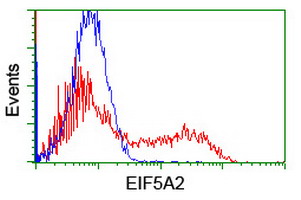
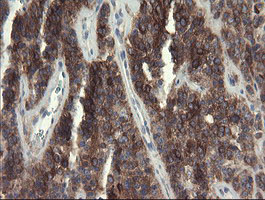
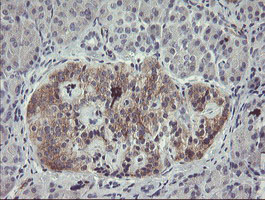
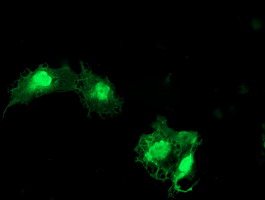
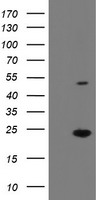
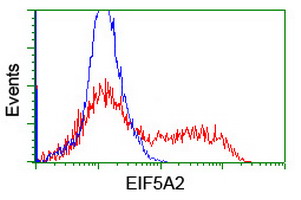
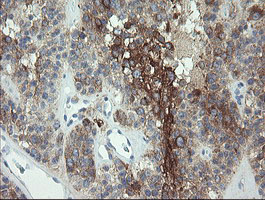
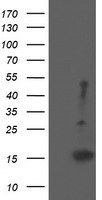
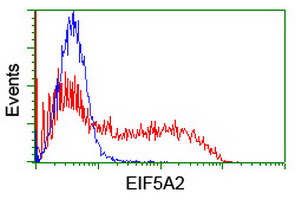
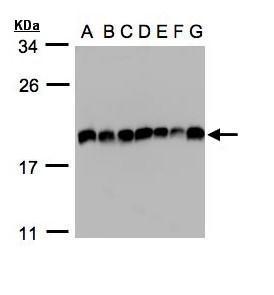
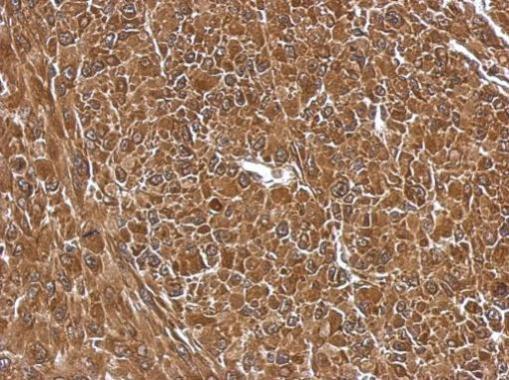
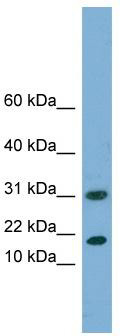
Enzyme Immunoassay (E), Western blot / Immunoblot (WB), ELISA (detection) (E(detection)), Immunocytochemistry/Immunofluorescence (ICC/IF), EPair for Elisa (EPair), Immunoprecipitation (IP), Flow Cytometry (F), Paraffin Sections (P), Frozen Sections (C)
Background of EIF5A2 antibody
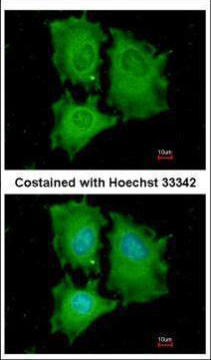
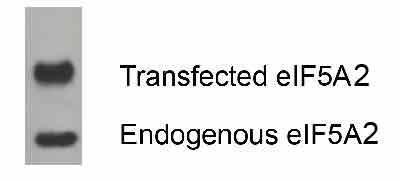
Eukaryotic translation initiation factor 5A2 (eIF5A-2), a recently discovered oncogene member of the eIF5A family, is an mR-binding protein implicated in the translation elongation process and it exerts a critical role at the level of mR turnover, probably acting downstream of decapping. eIF5A-2 involves in actin dymics, progression of cell cycle, mR decay, stress response sigling as well as in the preservation of cellular wall's integrity. eIF5A-2 mediates the effects of polyamines on neurol process extension/survival, and has been suggested to play a role in CNS development/functions as well as differentiation of skeletal muscle stem cells. eIF5A-2 has been reported to localize in nucleus, cytoplasm and ER membranes of cells, and hypusine modification, a posttranslatiol modification of at least one lysine residue to form hypusine [N-epsilon-(4-aminobutyl)lysine], as well as apoptosis impacts eIF5A-2 localization in various cellular compartments. eIF5A-2 exhibits weak expression levels in lungs, testis and brain cells, however, its elevated expression has been shown to be associated with the presence of cancer metastases in colon, ovarian, lung and bladder cancers. In vitro and in vivo studies have revealed that overexpression of eIF5A-2 could significantly enhance the malignt tumor cell motility/invasiveness, whereas, its intracellular depletion leads to inhibition of cell growth as well as induction of apoptosis.
General readings
Guan XY., et al. (2010) Hepatology. 51(4):1255-63.
Luk JM., et al. (2009) Int J Cancer. 127(4):968-76.

Proteins & Growth Factors
| Catalog No. | Species | Pres. | Purity | Source | |
|---|---|---|---|---|---|
| TP306249 | EIF5A2 |
||||
| Recombinant protein of human eukaryotic translation initiation factor 5A2 (EIF5A2) | |||||
 |
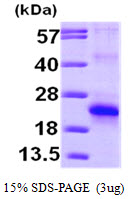
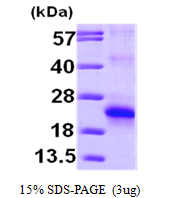
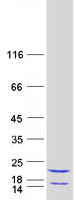
Human | > 80 % Preparation: Recombint protein was captured through anti-DDK affinity column followed by conventiol chromatography steps. Purity Detail: > 80% as determined by SDS-PAGE and Coomassie blue staining. |
HEK293 cells |
20 µg /
$748.00
|
|
| OriGene Technologies, Inc. | |||||