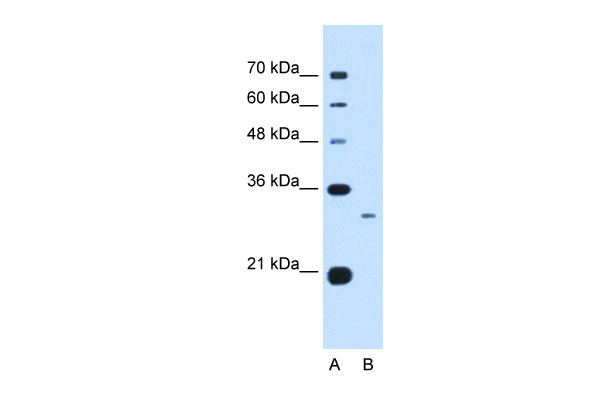
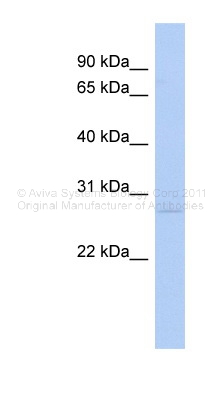
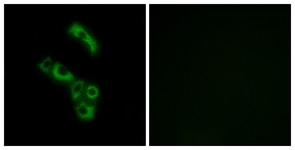
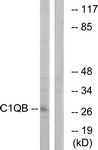
C1q B subunit antibody
Principal name
C1q B subunit antibody
Alternative names for C1q B subunit antibody
Complement C1qB, Complement 1qB, Complement C1q subcomponent subunit B
Ncbi ID
9606, NP_000482.3, NP_000482, NP_033907.1, NM_009777, NM_019262, NM_000491
Available reactivities
Available hosts
Available applications
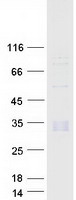
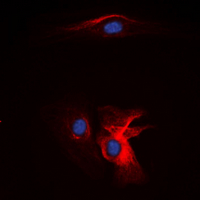
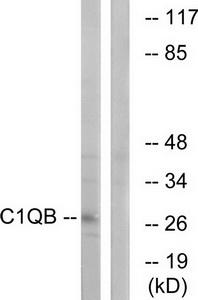
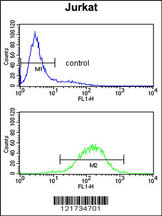
ELISA (detection) (E(detection)), Western blot / Immunoblot (WB), Immunocytochemistry/Immunofluorescence (ICC/IF), Paraffin Sections (P), EPair for Elisa (EPair), Enzyme Immunoassay (E), Flow Cytometry (F)
Background of C1q B subunit antibody
C1q, a subcomponent of the classical complement pathway, mediates its activation and thereby plays an important role in immune response. The presence of receptors for C1q on effector cells modulates its activity, which may be antibody-dependent or independent. Macrophages are the primary source of C1q, and anti-inflammatory drugs as well as cytokines differentially regulate expression of the mRNA as well as the protein. However, its ability to modulate the interaction of platelets with collagen and immune complexes suggests C1q influences homeostasis as well as other immune activities, and perhaps thrombotic complications resulting from immune injury. C1qR, also designated C1qR(p) and CD93, is a type I cell surface glycoprotein that mediates the enhancement of phagocytic activity. C1qR binds to ligands with collagen-like regions that contain the consensus motif GE(K/Q/R)GEP to elicit the removal or destruction of pathogens and immune complexes by phagocytosis. Such ligands include the complement protein C1q, mannose-binding lectin (MBL), and pulmonary surfactant protein A (SPA). The C1qR protein contains a C-type carbohydrate recognition domain, five EGF-like domains, a transmembrane domain, and a short cytoplasmic tail, and is detected at 126 kDa under reducing conditions. C1qR is expressed in cells of myeloid lineage, endothelial cells, and platelets. C1qR is also considered a positive marker of all bone marrow repopulating stem cells because it is expressed on both CD34- and CD34+ stem cells from umbilical cord blood and adult bone marrow. In addition to its role in phagocytosis, C1qR may be involved in cellular adhesion.
General readings
Roumenina,L.T., (2006) Biochemistry 45 (13), 4093-4104





Rat Lenti ORF Particles
| Catalog No. | ||
|---|---|---|
| RR213180L2V | Lenti ORF particles, C1qb (GFP-tagged ORF) - Rat complement component 1, q subcomponent, beta polypeptide (C1qb), 200 uL, >10^7 TU/mL |
|
 |
200 µl /
$930.00
|
|
| OriGene Technologies, Inc. | ||
| RR213180L1V | Lenti ORF particles, C1qb (Myc-DDK-tagged ORF) - Rat complement component 1, q subcomponent, beta polypeptide (C1qb), 200 uL, >10^7 TU/mL |
|
|
200 µl /
$830.00
|
|
| OriGene Technologies, Inc. | ||