SCARB1 antibody
Principal name
SCARB1 antibody
Alternative names for SCARB1 antibody
SRB1, SR-BI, CLA1, CLA-1, CD36L1, Scavenger receptor class B member 1, CD36 antigen-like 1, CD36 and LIMPII analogous 1, Collagen type I receptor thrombospondin receptor-like 1
Ncbi ID
9606, 10090, NP_001192011.1, NP_005496.4, NP_113729.1, 10116, NM_001082959, NP_005496, NP_001076428, 37999904, NM_016741, NM_031541, NM_005505
Available reactivities
Available hosts
Available applications
Immunoprecipitation (IP), Western blot / Immunoblot (WB), Flow Cytometry (F), Immunocytochemistry/Immunofluorescence (ICC/IF), Frozen Sections (C), Functional assay (FN), Neutralisation (NEUT), Paraffin Sections (P), Enzyme Immunoassay (E)
Background of SCARB1 antibody
Scavenger receptors have been studied primarily for their ability to bind and internalize modified lipoproteins. They have been found in the development of atherosclerosis and other macrophage-associated functions. Scavenger receptors also function as pattern recognition receptors for a wide variety of pathogens. This finding indicates a potential role in host defense. SR-BI belongs together with CD36 to the class B scavenger receptor family.
SR-BI is a multiligand membrane protein existing in various organs such as the liver and various cell types such as endothelial cells, macrophages, brain cells, Leydig cells and Sertoli cells. SR-BI has been found as a receptor for phospholipids, free and (lipo)protein-bound ApoE, lipid-bound ApoA-I, HDL, hypochlorite-modified LDL and more. In liver, the PDZK-1 (and possible other PDZ domains) of SR-BI has been found to be essential for cell surface expression and, hence, reverse cholesterol transport. In the brain, the presence of SR-BI seems to be involved in the uptake of oxidatively modified lipoproteins and beta-amyloid protein complexed with ApoE, suggesting SR-BI to be an important tool for studies on neurodegenerative disorders. In the testis, SR-BI is expressed in two somatic cell types: Leydig cells and Sertoli cells. SR-BI functions at least partly as a phosphatidyl serine receptor (PSR), enabling Sertoli cells to recognize and phagocytose apoptotic spermatogenic cells at all stages of differentiation.
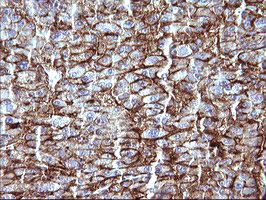
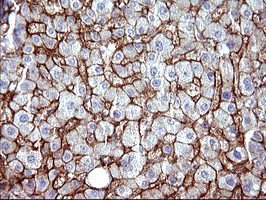


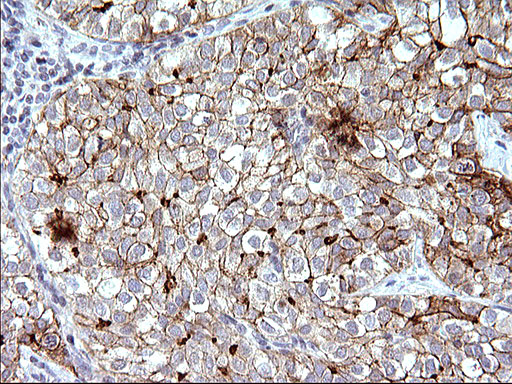
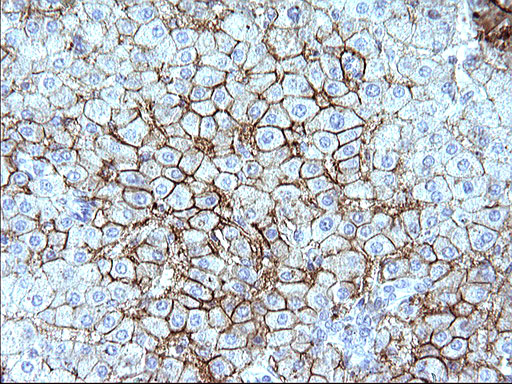
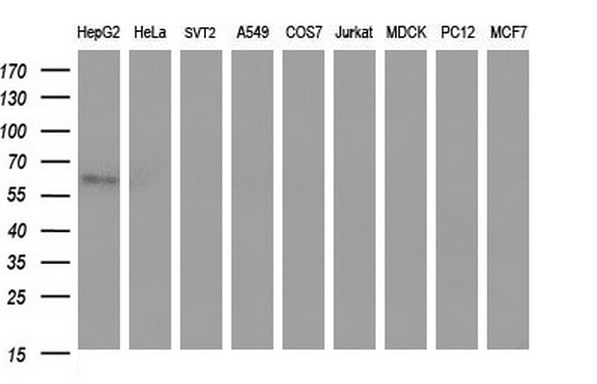

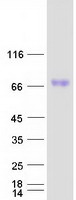
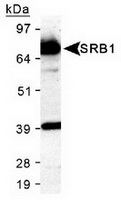
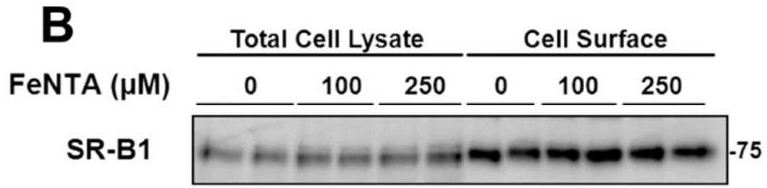
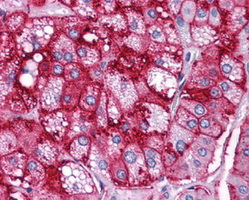
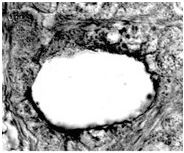
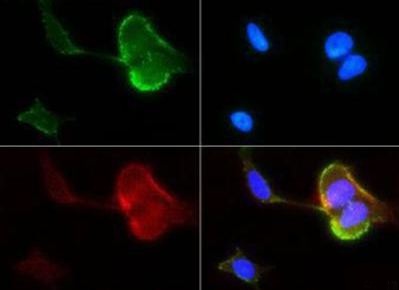
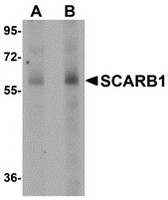
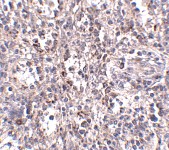
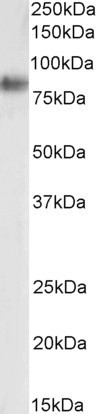
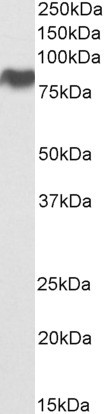
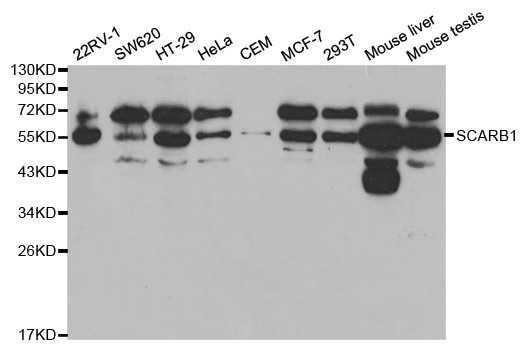
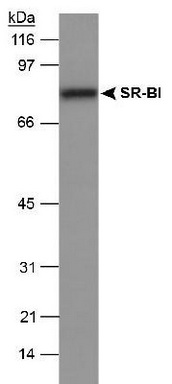
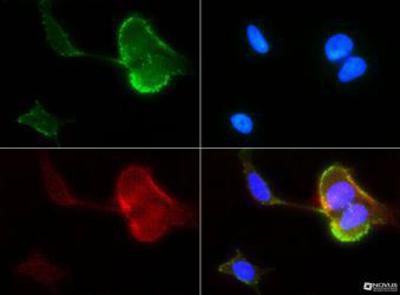
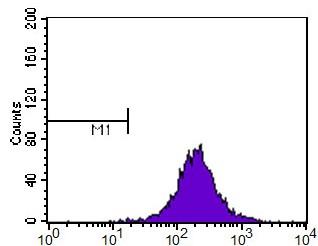
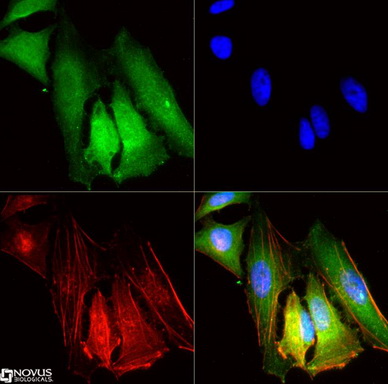
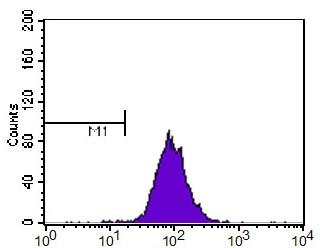
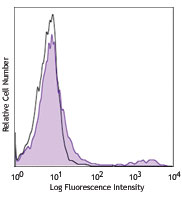
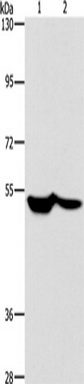
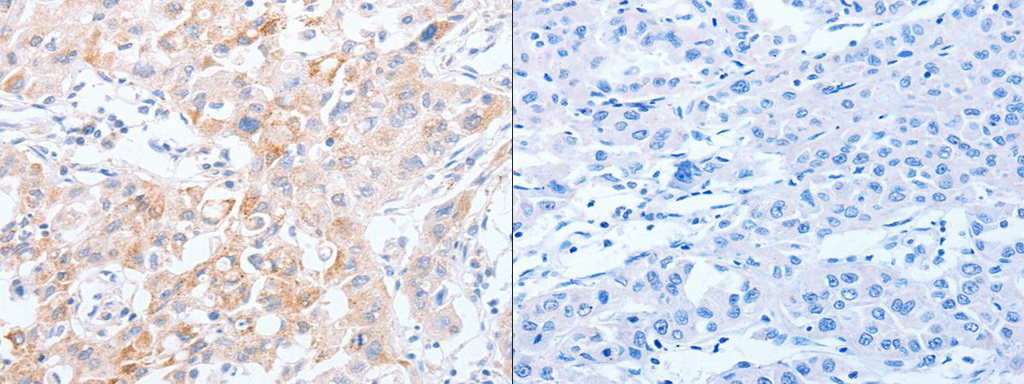
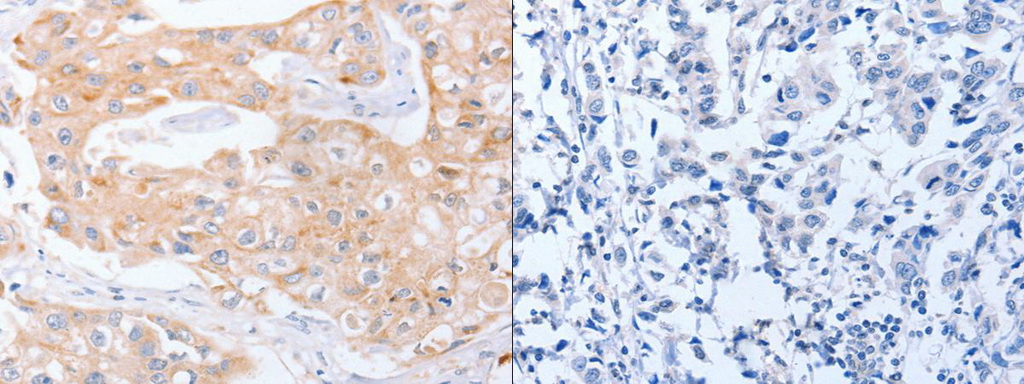
Primary Antibodies
| Catalog No. | Host | Iso. | Clone | Pres. | React. | Applications | |
|---|---|---|---|---|---|---|---|
| TA336639 | SCARB1 antibody |
||||||
| Rabbit Polyclonal SR-BI Antibody | |||||||
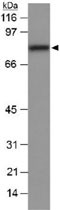
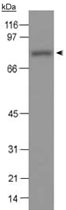
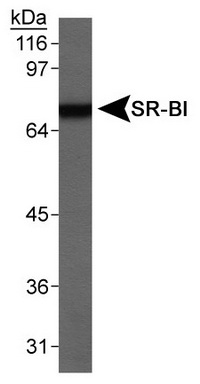
![Western Blot: SR-BI Antibody [TA336639] - Detection of SR-BI in mouse liver lysate (20 ug) using NB 400-101. ECL detection 5 seconds.](https://m1.acris-antibodies.com/catalog/product/cache/2/small_image/50x50/9df78eab33525d08d6e5fb8d27136e95/OriGene/NB400-101-1-W.jpg) |
Rabbit | Purified | Bov, Hu, Ms, Rt | C, F, ICC/IF, IP, P, WB |
0.1 ml /
$475.00
|
||
| OriGene Technologies, Inc. | |||||||
 +2 additional images +2 additional images |
|||||||
| TA336645 | SCARB1 antibody |
||||||
| Rabbit Polyclonal SR-BI/SR-BII Antibody | |||||||
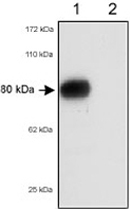
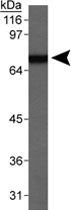
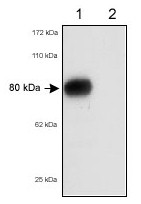
![Western Blot: SR-BI/SR-BII Antibody [TA336645] - Detection of RED-1 in 80 ug of total mouse liver lysates. Lane 1: wild-type mice, Lane 2: SR-BI deficient mice.](https://m1.acris-antibodies.com/catalog/product/cache/2/small_image/50x50/9df78eab33525d08d6e5fb8d27136e95/OriGene/NB400-134-1-W.jpg) |
Rabbit | Purified | Hu, Ms, Rt | C, F, ICC/IF, WB |
0.1 ml /
$415.00
|
||
| OriGene Technologies, Inc. | |||||||
| +3 additional images |
|||||||